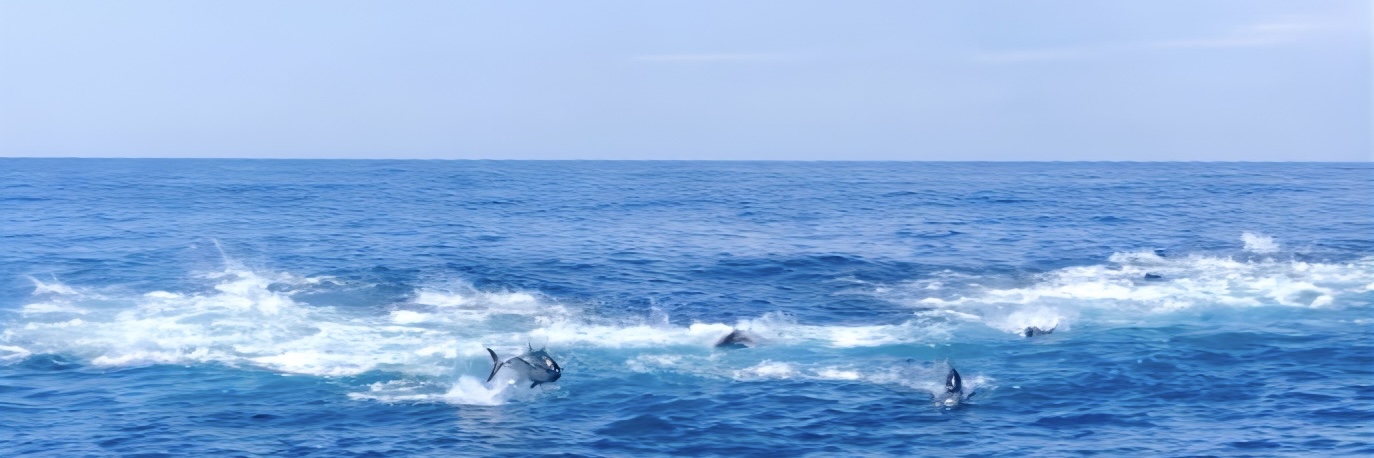
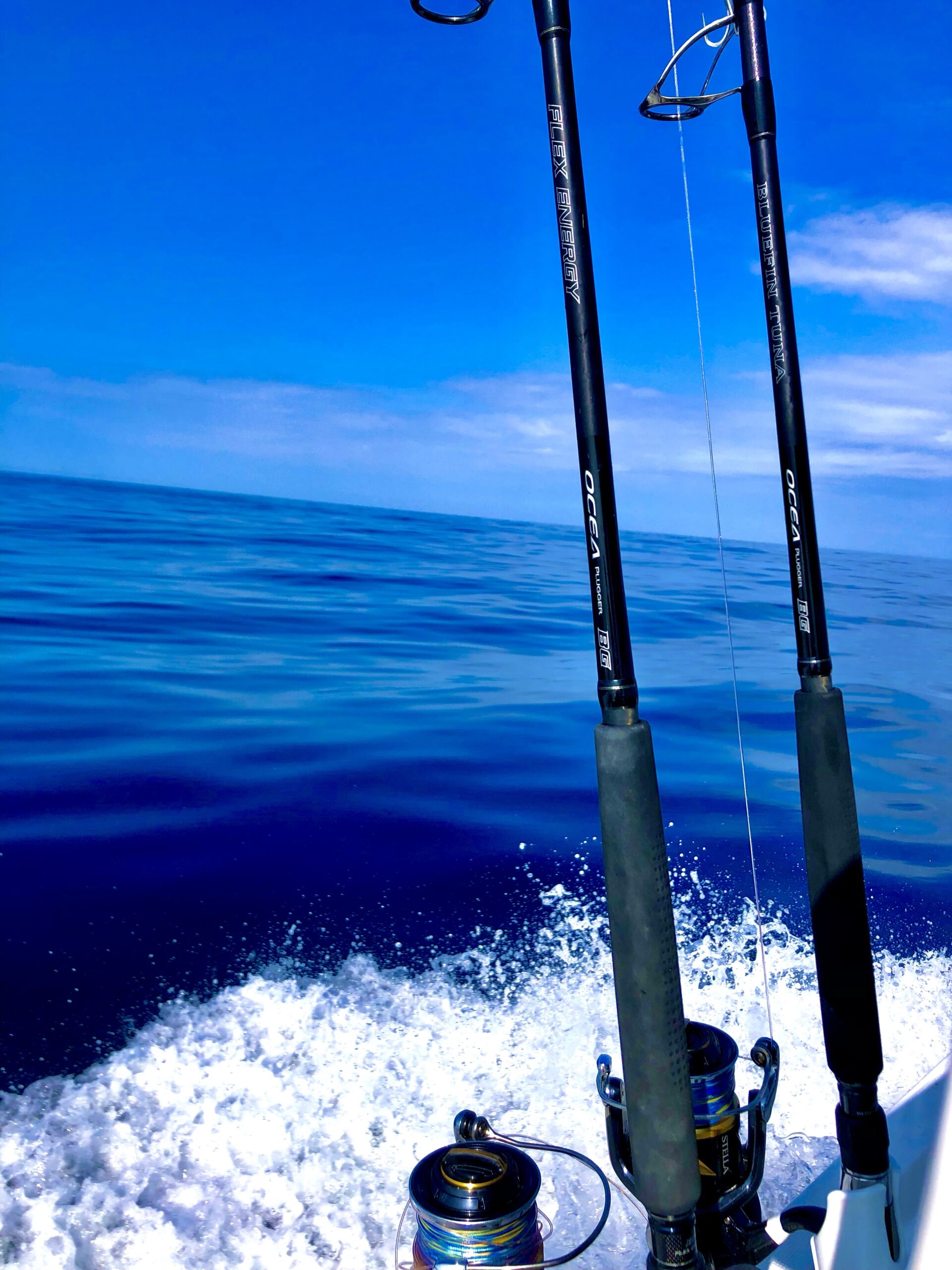
This chapter is not about deciding which fighting style is “right” or “wrong.” It explores two different philosophies, each perfectly rational within its own environment and culture. “Let the fish run and tire itself out” is a well-established, world-standard strategy that clearly works. I have no intention of dismissing your personal fighting style. What I want to explore is this question: Why is Japanese bluefin casting so uniquely different from the rest of the world? Understanding that requires us to start at one very specific place.
- 1. It All Started in the Raging Currents of the Tsugaru Strait
- 2. The Global Standard: “Let the Fish Run — Tire It Out”
- 3. A Critical Distinction: “Strategic Running” vs “Being Run”
- 4. Japan’s Extreme Philosophy: “The Shorter the First Run, the Better”
- 5. An Interesting Convergence — The World Starts to Notice
- 6. Drag Settings: Numbers That Reveal Different Philosophies
- 7. How This Philosophy Shaped Japanese Tackle
- 8. The Reality on the Water: Ideals vs Actual Practice
- 9. Conclusion — The Sea Creates the Philosophy, the Philosophy Creates the Tackle
- Reference Sources
1. It All Started in the Raging Currents of the Tsugaru Strait
Japanese bluefin casting was born in 1993, when Ichiro Sato pioneered the technique in the Tsugaru Strait. This strait typically runs at 2–4 knots, but during spring tides the current can reach 6–7 knots (about 13 km/h). Among bluefin casting grounds worldwide, there are very few places where anglers cast lures into such violent tidal flows. Perhaps only the Strait of Gibraltar, with maximum tidal currents around 4 knots, comes close.
What happens when a bluefin hits in a 6–7 knot current? The fish rides the tide and takes off in an instant. If your drag is set light, the spool is emptied in seconds.
This extreme environment gave birth to one fundamental rule:
This is not meant to dismiss other styles. It is simply the answer that emerged as a physical necessity in one of the world’s most challenging fishing environments. That one principle has shaped almost everything about Japanese bluefin casting ever since.
2. The Global Standard: “Let the Fish Run — Tire It Out”
Outside Japan, you hear a completely different philosophy spoken as “common sense.” In the United States, Canada, Australia, New Zealand, and across Europe, the basic approach is remarkably consistent: “let the fish run and tire itself out.”
And this is not some untested theory. It is a proven, rational strategy that professional captains have used for decades to land giant bluefin.
Captain Mike Hogan of Salty Cape, a well-known Cape Cod guide, puts it this way:
“Let the fish run. It’s hands down the fastest way. That fish needs to get tired.”
He recommends setting the drag at about 12 lb (roughly 5.4 kg), letting the fish take off, and allowing it to make five or six runs. Only after the fish is thoroughly exhausted do you start steadily gaining line. That is the “textbook” approach for American bluefin casting.
A guide article on the Outer Banks (FishingBooker, 2026) is even more direct:
“You’re going to lose around 300 yards of line before you even start. That’s just a fact.”
In other words, losing 300 yards (about 270 m) in the early phase is simply expected. Reels are spooled with massive amounts of line, the fish is allowed to run as far as it wants, and you fight it back only after it tires. That is the global standard.
3. A Critical Distinction: “Strategic Running” vs “Being Run”
There is an absolutely crucial distinction we must make here:
“Strategically letting the fish run to tire it out” and “wanting to stop it but being unable to” are two completely different things.
The former is the world-standard, rational approach that works very well in the right conditions. The latter is what happens when tackle, physical strength, or technique are insufficient to control the fish.
Even in Japan, a “let it run” style is widely practiced in the real world. For yellowfin tuna (20–70 kg), the standard approach is to let the first run happen to prevent hook pulls. In Sagami Bay, off Mie, and around Okinawa, many anglers consistently catch yellowfin with this run-oriented style.
Furthermore, in Japanese waters outside the Tsugaru Strait—where currents are not as extreme—there are plenty of experienced anglers who, even for bluefin, will choose to let the fish run to some extent rather than force a stop and risk a line break. They adapt their strategy to local conditions and use a “strategic run-and-tire” approach suited to calmer waters.
This is not “giving up” or “second-best.” It is simply a different optimal solution, tuned to the target species and the specific conditions of each fishing ground.
4. Japan’s Extreme Philosophy: “The Shorter the First Run, the Better”
In the raging currents of the Tsugaru Strait, however, a very different logic took over. To prevent the cascading problems that occur once a fish really starts running in that flow, the pioneers pushed in the opposite direction: do not let it run in the first place.
In Sato’s drag-work article for VARIVAS (March 2026), he explains that for PE12 (roughly 160 lb class) he sets an initial drag of 13–15 kg. The ideal is to land the fish “without touching the drag at all.” If a fish bigger than expected takes the lure, he first uses hand drag—physically palming the spool—to stop it. If it still doesn’t stop, he tightens the drag slightly and tries to stop it again with hand drag. The priority, always, is to stop the fish.
A Tackle House article on Noto bluefin fishing (July 2023) puts it this way:
“In the end, everything comes down to how little you can let the tuna run during that first dash. A drag tension of 10–12 kg is obviously tough on the fish too.”
5. An Interesting Convergence — The World Starts to Notice
Here’s where it gets fascinating. In that same Outer Banks guide article that advocates letting the fish run, there is a passage that sounds very Japanese:
“If you let the fish run, it gets water through its gills and comes back twice as strong. The only way to bring in Bluefin is to keep the pressure on constantly.”
This is exactly what veteran Japanese tuna anglers have learned through experience. The key difference is this: in America, this idea is usually presented as an “advanced technique” for experienced anglers. In Japan, it is something that beginners are taught from day one as a fundamental principle.
This difference is not about superiority. It simply reflects the environments in which each system evolved. In the Tsugaru Strait, “stopping” is a survival requirement. In calmer waters, “letting it run” can work perfectly well. Each environment determines its own “basics.”
6. Drag Settings: Numbers That Reveal Different Philosophies
When you compare the recommended drag settings, the difference in underlying philosophy becomes clear in the numbers.
US Standard: 50 lb line, initial drag 10 lb (approximately 20% of breaking strength)
On paper those starting percentages look similar, but in practice the Japanese style frequently pushes far beyond that. With hand drag, momentary pressure can exceed 30% of line strength. In most American tutorials, palming the spool is mentioned, if at all, as a minor end-game adjustment, not as a core tool to shut down the very first run.
7. How This Philosophy Shaped Japanese Tackle
The “don’t let it run” mindset has pushed Japanese tackle to some of the highest performance levels in the world.
Indestructible reels: Shimano’s STELLA SW and Daiwa’s SALTIGA are designed to hold more than 20 kg of drag pressure for extended periods without mechanical failure. Daiwa’s 2025 DRD system was described by Sato as giving the feeling that “DRD is doing, mechanically, what advanced anglers used to do with hand drag.”
Extremely strong braid: VARIVAS Avani Casting PE SMP X8, for example, rates its PE8 at 120 lb (about 60 kg). Many mainstream Western braids of similar diameter are rated around 80 lb. That 40 lb difference becomes highly significant when your fighting style involves repeatedly pushing line tension toward the breaking point.
When you compare full setups, it’s not unusual for a serious Japanese bluefin casting outfit to total 300,000–500,000 yen, whereas an effective overseas setup might be 100,000–200,000 yen. The difference isn’t because one side is “cutting corners.” Each market is simply optimizing cost and performance for a very different way of fighting fish.
8. The Reality on the Water: Ideals vs Actual Practice
It’s important to acknowledge what really happens on the water. Even within Japan, a wide range of fighting styles coexist in practice.
Holding 15 kg of drag on a rocking deck for an extended period is physically demanding. It requires not only strength but also technique and experience. Many anglers quite reasonably choose a more moderate drag setting for safety and practicality. That is a rational decision, not a failure.
Fight times show a similar gap between ideals and reality. Top-tier experts in Japan have documented landing 115 kg bluefin in around 20 minutes, but it’s not uncommon for average anglers to spend 1 hour 45 minutes on a 150 kg fish, or 3+ hours on a 100 kg class fish. Those numbers are very similar to reports from Cape Cod, where fights commonly range from 30 minutes to several hours.
9. Conclusion — The Sea Creates the Philosophy, the Philosophy Creates the Tackle
The real difference between Japanese and global bluefin casting lies not in how the rod is held or which techniques are used. It lies in the underlying philosophies shaped by local marine environments.
The 6–7 knot currents of the Tsugaru Strait produced the answer: “If you let it run, you lose. Stop it.” The 2–3 knot tides of Cape Cod produced the answer: “Let the fish run. Tire it out.”
Neither is universally “correct.” Each is a logical, efficient response to a particular environment.
The raging strait gave birth to an extreme “stop” style. Calmer seas encouraged a safer, steadier “let it run” strategy. Elsewhere, long, shared battles with giant tuna have become part of a cherished sport-fishing culture. All of them are valid. All of them work in their proper context.
What is unique about Japan is that this rare “never let it run” philosophy took root so deeply that it drove tackle development to world-class levels of strength and durability. And now, as overseas guides begin to talk more about constant pressure and limiting a tuna’s ability to recover, you can see the rest of the world slowly recognizing the logic behind Japan’s approach.
Reference Sources
- Tsugaru Strait tidal currents (max 7 knots): https://blue-forest.air-nifty.com/blueforest/2016/03/post-b084.html
- Ichiro Sato Fight & Drag Work Analysis (VARIVAS, March 2026): https://www.varivas.co.jp/contents/offshore/offshore_list/bluefintuna_casting/
- Hiromu Sano Drag Settings & Fight Strategy (Anglers Time, October 2025): https://anglers-time.com/7379/
- Tackle House Noto Bluefin Casting (July 2023): https://tacklehouse.co.jp/prototypefile/?p=25522
- Salty Cape – How to Fight and Land a Bluefin Tuna: https://saltycape.com/how-to-fight-and-land-a-bluefin-tuna-212/
- FishingBooker – Outer Banks Bluefin Complete Guide (January 2026): https://fishingbooker.com/blog/giant-bluefin-tuna-fishing-outer-banks/
- VARIVAS Avani Casting PE SMP specifications: https://japantackle.com/lines/varivas-avanicastpe-smp.html
コメント