Introduction
In Chapter 1, we looked back at how Ichiro Sato pioneered the world’s first tuna lure casting in the Tsugaru Strait, Aomori, approximately 32 years ago. In Chapter 2, we examined why Japanese-made tackle came to dominate global markets as a result of that challenge. In this chapter, we widen the scope dramatically, surveying 25 ocean regions around the world where anglers cast lures at tuna in the 2020s.
The focus is lure casting only. Trolling, jigging, and live bait are excluded. The two main lure types are diving pencils and poppers, and casting techniques fall broadly into two categories: “Nabura-uchi” and “Sasoi-dashi.”
Two Techniques – Nabura-uchi and Sasoi-dashi
Nabura-uchi (English: casting to feeding fish / run & gun)
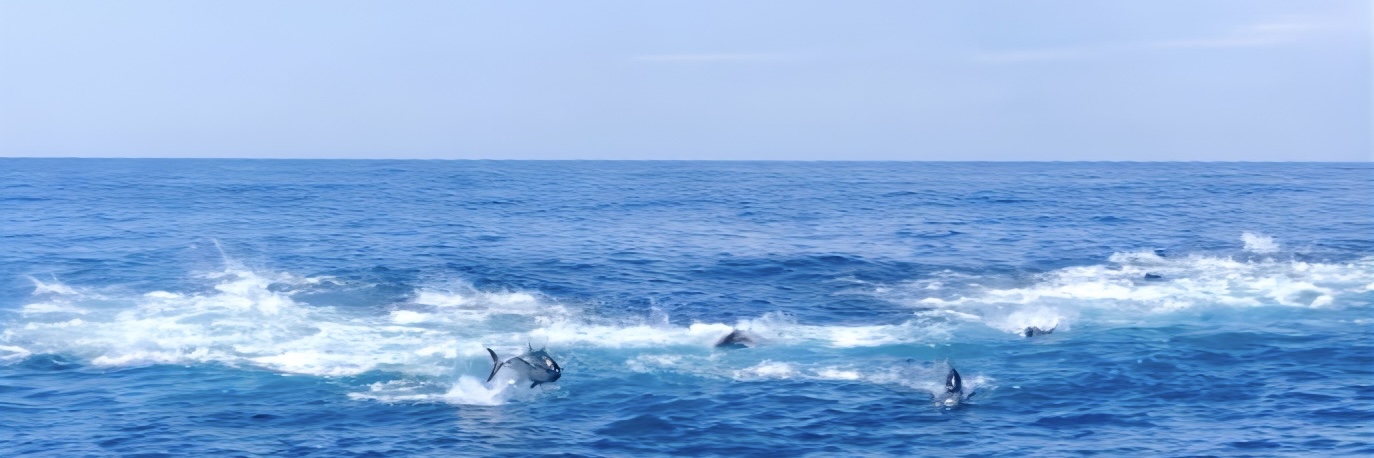
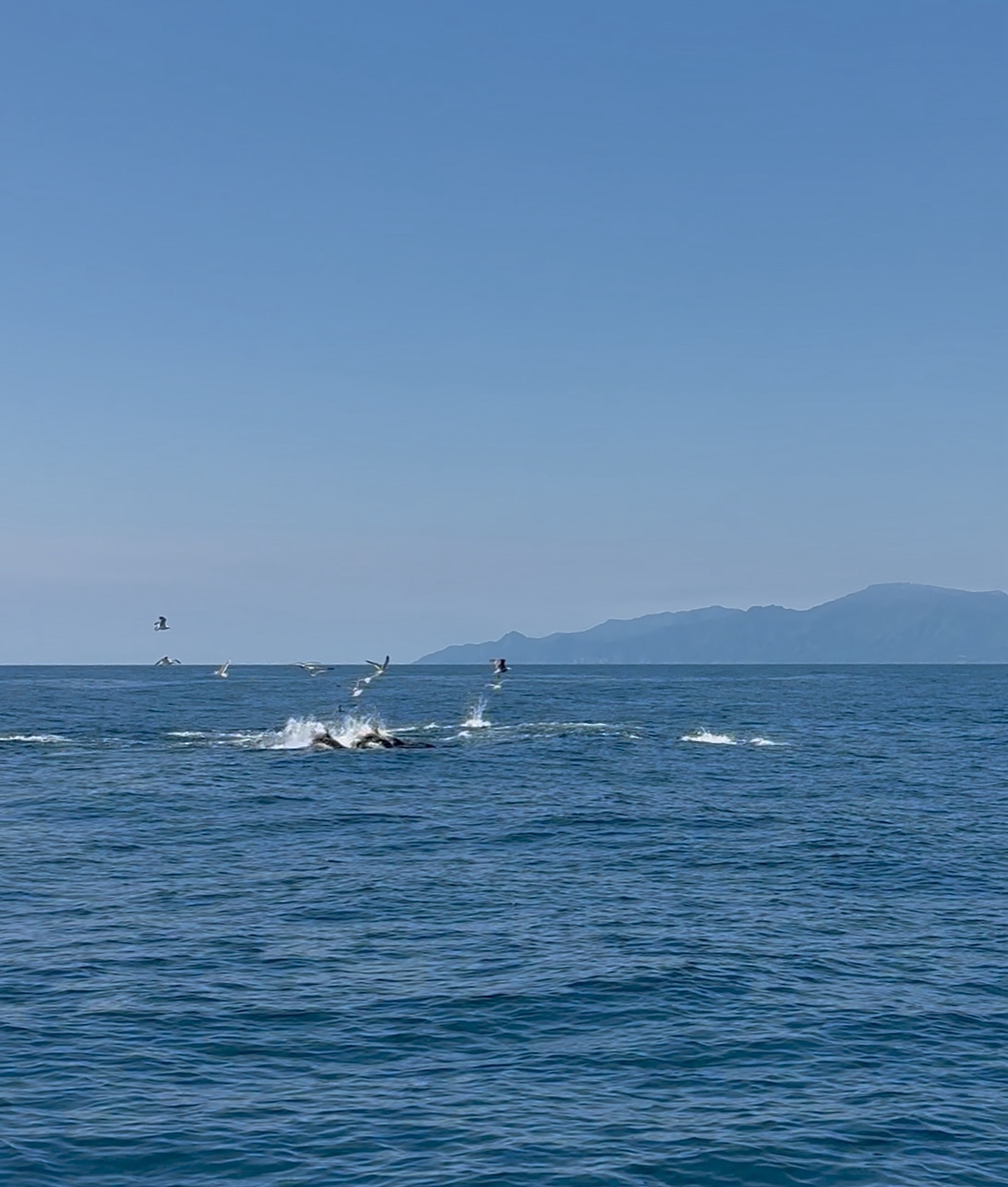
When tuna chase baitfish to the surface, the water erupts in a violent, boiling frenzy. In Japanese this is called “nabura”; in English, “boil,” “bust-up,” or “feeding frenzy.” Casting a lure directly into this chaos and triggering a strike from the excited tuna — that is Nabura-uchi. This is the dominant style of tuna casting worldwide. The captain spots the surface activity by eye or sonar, races toward it at full speed, and anglers fire casts into the commotion. This “run & gun” approach is the global standard.
Sasoi-dashi (No direct English equivalent → “Japanese-style topwater”)
When there is no surface activity — when tuna are holding at 20 to 50 meters below — the angler casts a lure and works it across the surface to draw the tuna upward for a strike. This technique was established in 1993 by Ichiro Sato using SOULS lures, and it remains a uniquely Japanese method. Its greatest advantage is that it produces results even on days when no feeding activity is visible at the surface. In recent years, anglers in the Strait of Gibraltar and the Canary Islands have begun adopting this Japanese-born technique.
Table 1: Ocean Currents & Techniques
| No. | Country / Region | Main Current (Avg. Speed) | Technique |
|---|---|---|---|
| 1 | Japan (Nationwide) | Kuroshio 2–4 kt / Tsushima Current 1–3 kt / Oyashio 0.5–1 kt convergence | Sasoi-dashi + Nabura-uchi |
| 2 | USA – Cape Cod (MA) | Gulf Stream 2–3 kt + Labrador Current 0.3–0.5 kt | Nabura-uchi (run & gun) |
| 3 | USA – Outer Banks (NC) | Gulf Stream nearshore 2–4 kt | Nabura-uchi (run & gun) |
| 4 | USA – Hawaii (Kona–Kauai) | North Equatorial Current 0.3–0.5 kt | Nabura-uchi (run & gun) |
| 5 | Canada – PEI / Nova Scotia | Gulf Stream tail + Labrador Current 0.3–1 kt | Nabura-uchi (run & gun) |
| 6 | Mexico – Cabo San Lucas | California Current 0.3–0.5 kt + North Equatorial Current | Nabura-uchi (run & gun) |
| 7 | Panama – Chiriquí Gulf | Eastern Pacific Warm Pool 0.3–0.5 kt | Nabura-uchi (run & gun) |
| 8 | Spain – Strait of Gibraltar | Surface current 2–3 kt + tidal flow up to 4 kt | Nabura-uchi (summer) + Sasoi-dashi (winter) |
| 9 | Spain – Valencia | Western Mediterranean circulation 0.3–0.8 kt | Nabura-uchi (run & gun) |
| 10 | Spain – Canary Islands | Canary Current 0.3–0.5 kt + Atlantic warm flow | Nabura-uchi (Sasoi-dashi emerging) |
| 11 | France – Corsica / Southern France | Ligurian Current 0.3–0.8 kt | Nabura-uchi (run & gun) |
| 12 | Italy – Sardinia | Mediterranean circulation 0.3–0.8 kt | Nabura-uchi (run & gun) |
| 13 | Croatia (Adriatic Sea) | Adriatic circulation 0.2–0.5 kt | Nabura-uchi (run & gun) |
| 14 | Ireland / UK | North Atlantic Current 0.2–1 kt | Nabura-uchi (C&R only) |
| 15 | Portugal – Azores | Gulf Stream branch + Canary Current 0.3–0.8 kt | Nabura-uchi (run & gun) |
| 16 | Cape Verde (West Africa) | Canary Current + North Equatorial Current 0.3–0.5 kt | Nabura-uchi (run & gun) |
| 17 | South Africa – Cape Town | Agulhas Current 2–5 kt (Indian–Atlantic convergence) | Nabura-uchi (run & gun) |
| 18 | Maldives | Indian Ocean Monsoon Current 0.5–1.5 kt | Nabura-uchi (run & gun) |
| 19 | India – Andaman Islands | Bay of Bengal Monsoon Current 0.5–1 kt | Nabura-uchi (run & gun) |
| 20 | Oman – Masirah Island | Arabian Sea Monsoon Current 0.5–1.5 kt (summer upwelling) | Nabura-uchi (run & gun) |
| 21 | UAE – Fujairah | Gulf of Oman current 0.3–0.8 kt | Nabura-uchi (run & gun) |
| 22 | Mauritius / Rodrigues | South Equatorial Current 0.5–1 kt | Nabura-uchi (run & gun) |
| 23 | Indonesia – North Sulawesi | Indonesian Throughflow 0.5–1 kt | Nabura-uchi (run & gun) |
| 24 | Fiji | South Equatorial Current 0.3–0.8 kt | Nabura-uchi (run & gun) |
| 25 | New Zealand – East Coast | East Auckland Current 0.5–1 kt | Nabura-uchi (run & gun) |
Table 2: Target Species & Casting Start Period
| No. | Country / Region | Main Target Species / Size | Casting Since |
|---|---|---|---|
| 1 | Japan (Nationwide) | Bluefin up to 186 kg / Yellowfin up to 90 kg | c. 1993 (Ichiro Sato) |
| 2 | USA – Cape Cod (MA) | Bluefin 200 lb+ | Early 2000s |
| 3 | USA – Outer Banks (NC) | Bluefin / Yellowfin, large | Late 2000s |
| 4 | USA – Hawaii (Kona–Kauai) | Yellowfin 50–200 lb | 2000s |
| 5 | Canada – PEI / Nova Scotia | Bluefin 500–1,000 lb+ | 2010s |
| 6 | Mexico – Cabo San Lucas | Yellowfin, large | 2000s |
| 7 | Panama – Chiriquí Gulf | Yellowfin 50–200 lb (multiple IGFA records) | Late 2000s |
| 8 | Spain – Strait of Gibraltar | Bluefin 200–600 lb+ | Early 2010s |
| 9 | Spain – Valencia | Bluefin 100–700 lb | 2010s |
| 10 | Spain – Canary Islands | Bigeye 100–1,000 lb | 2010s |
| 11 | France – Corsica / Southern France | Bluefin | 2010s |
| 12 | Italy – Sardinia | Bluefin (traditional Mattanza waters) | 2010s |
| 13 | Croatia (Adriatic Sea) | Bluefin 200 kg+ | Late 2010s |
| 14 | Ireland / UK | Bluefin 200–800 lb (C&R only / Tuna CHART) | 2019– |
| 15 | Portugal – Azores | Bigeye 200–300 lb+ / Yellowfin | 2010s |
| 16 | Cape Verde (West Africa) | Yellowfin / Bigeye / Wahoo | 2010s |
| 17 | South Africa – Cape Town | Yellowfin 50–220 lb | 2010s |
| 18 | Maldives | Yellowfin / Dogtooth※ / GT | Late 2000s |
| 19 | India – Andaman Islands | Dogtooth※ / Yellowfin / GT | 2010s |
| 20 | Oman – Masirah Island | Yellowfin 50–100 kg+ | 2010s |
| 21 | UAE – Fujairah | Yellowfin / Longtail | Late 2010s |
| 22 | Mauritius / Rodrigues | Dogtooth※ / Yellowfin / GT | 2010s |
| 23 | Indonesia – North Sulawesi | Yellowfin / Dogtooth※ / GT | 2010s |
| 24 | Fiji | Yellowfin / Dogtooth※ | Late 2010s |
| 25 | New Zealand – East Coast | Yellowfin / Bluefin | 2010s |
Supplementary Fields
Nabura-uchi vs Sasoi-dashi – The World Relies on Nabura-uchi
A glance at the tables above reveals a clear pattern: virtually every field outside Japan is “Nabura-uchi dominant.” Find the boil, race to it, cast into it — this run & gun approach is the global standard for tuna casting.
Japan, by contrast, operates as a dual system: Sasoi-dashi plus Nabura-uchi. When surface feeding occurs, Japanese anglers certainly cast to it. But when the water goes quiet, they keep casting — working diving pencils and poppers across the surface to draw tuna up from depth. This “Sasoi-dashi” was established in 1993 by Ichiro Sato alongside the SOULS lure brand and has become the core of Japanese tuna casting culture.
The one notable exception is the Strait of Gibraltar. In summer, bluefin feeding frenzies are frequent and Nabura-uchi dominates. In winter, however, surface activity drops and a growing number of anglers there have adopted the Japanese Sasoi-dashi technique to maintain catch rates. The Canary Islands are also seeing early adoption of Sasoi-dashi, suggesting that the Japanese method is slowly spreading worldwide.
Tackle Overview
Across all 25 fields, Japanese lure manufacturers hold a strong position. Names like SOULS, Carpenter, Maria, CB ONE, DUO, TACKLE HOUSE, and FCL Labo are recognized from Cape Cod to Gibraltar to the Maldives. Japanese PE lines — VARIVAS, YGK, and SUNLINE — are synonymous with quality, though in the US market, DAIWA J-Braid Grand X8 and PowerPro dominate on price. Rods and reels vary significantly by region and budget; Japanese high-end gear is far from the only option. A detailed, country-by-country tackle comparison — what is used where and why — will be covered in Chapter 5.
Chapter 4 Preview
The next chapter is “Chapter 4: The Philosophy Born in the Tsugaru Strait — Two Bluefin Tuna Casting Cultures Shaped by Different Seas.” We will explore the fundamental differences in fighting philosophies—why Japan developed the unique “stop the fish” approach while the rest of the world believes in “letting it run and tire out.” We will examine how the extreme 6-7 knot currents of the Tsugaru Strait shaped this Japanese mindset and drove the evolution of the world’s most advanced heavy tackle systems.
Ocean Current Data:
NOAA – Gulf Stream Speed: oceanservice.noaa.gov
Hydro International – Kuroshio Observations: hydro-international.com
USNI – The Kuroshio or Japan Current: usni.org
Yachting World – Agulhas Current: yachtingworld.com
Britannica – North Atlantic Current: britannica.com
SEOS Project – Ocean Currents: seos-project.eu
Fishing Fields & Information:
Sportquest Holidays: sportquestholidays.com
Marlin Magazine: marlinmag.com
GT-Fishing: gt-fishing.com
Tuna Paradise: youtube.com/@TunaParadise
PEI Bluefin Tuna Charters: peibluefintunacharters.com
Central America Fishing: centralamericafishing.com
Fisheries Ireland – Tuna CHART: fisheriesireland.ie
Sportfishing Azores: sportfishingazores.com
Gamefishing Asia: gamefishingasia.com
BlueOcean GS: blueocean-gs.com
Anglers Time: anglers-time.com
VARIVAS: varivas.co.jp
360 Tuna: 360tuna.com


コメント