
Chapter 9: Is Bluefin Tuna Fishing Becoming Elite-Only? The Global Access Crisis No One Is Talking About
Chapter 7 examined how technology has made finding tuna more reliable than ever. Chapter 8 confronted the uncomfortable science behind catch and release. Now comes the question that sits beneath both discussions: who, exactly, gets to participate in this increasingly sophisticated sport?
Bluefin tuna casting is facing a structural crisis that cuts across national boundaries. The data reveals a troubling pattern: what was once a challenging but accessible pursuit is quietly transforming into something reserved for the older, wealthier, and already well-connected. This chapter examines how different regions are responding to this crisis—and why the solutions matter for the future of big game fishing worldwide.
The United States: When Market Forces Create Quiet Stratification
American recreational fishing appears to be thriving. According to the 2025 Special Report on Fishing released by NMMA and RBFF, 57.9 million Americans went fishing in 2024—representing 19% of the total population and the highest participation figure ever recorded. Post-pandemic outdoor recreation trends have proven durable, and fishing continues to benefit from this broader shift toward outdoor activities.
However, when the focus narrows to bluefin tuna, the demographics change dramatically. Research published through North Carolina State University and North Carolina Sea Grant reveals a stark reality: American anglers with household incomes below $150,000 per year are effectively absent from the population that regularly targets bluefin tuna. The barriers are consistent and formidable—the cost of operating large offshore vessels, fuel expenses for runs to productive grounds, and a regulatory framework that limits harvest to one to three fish per day, making the economics difficult to justify for anyone without substantial disposable income.
This represents the cumulative effect of pure market logic applied to a fishery where access has never been managed with participation equity in mind. The result is a sport that has never been more technically advanced, while simultaneously narrowing into what functions more like an exclusive club than a public fishery. Wealthy participants invest in the latest omnidirectional sonar systems and multiple outboard configurations, pushing techniques to unprecedented levels, while middle-income anglers are effectively priced out of regular participation.
Japan: Craft Culture and the Succession Crisis
Japan tells a different but equally concerning story. While no official demographic data exists specifically for tuna casting participants, charter operators and tackle manufacturers report a clear pattern: the active core is concentrated in the 40s to 60s age bracket, with limited evidence of meaningful generational replacement.
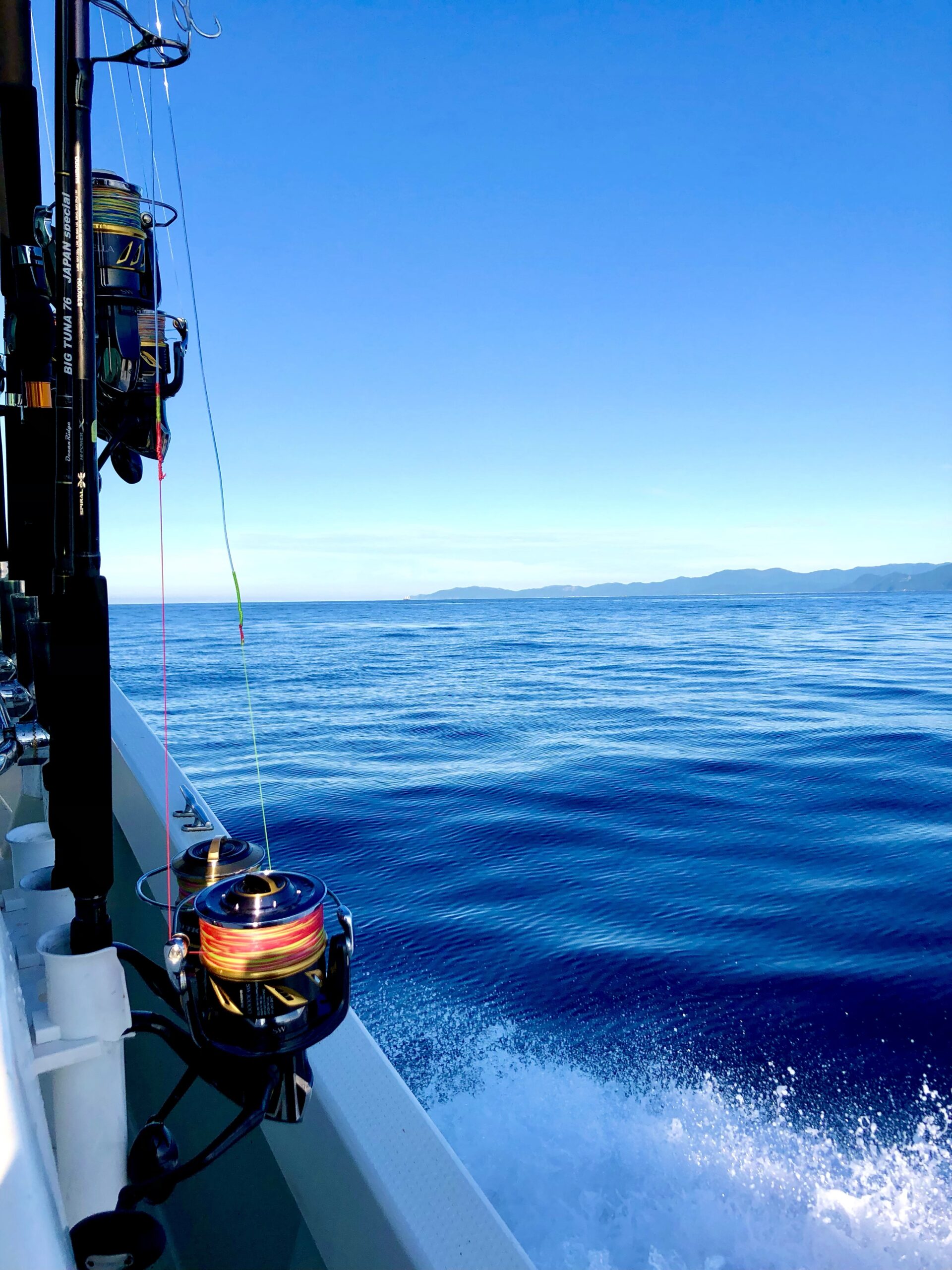
The barriers in Japan are structural rather than purely financial. Most anglers access the fishery through charter vessels rather than boat ownership. However, entry-level tuna casting tackle—a purpose-built rod and large spinning reel capable of handling the demands—requires an initial investment of ¥200,000 to ¥500,000 (roughly $1,300 to $3,500). Beyond equipment costs, the knowledge required is dense and highly specific: lure presentation techniques, approach timing, reading surface conditions, and understanding the unspoken protocols of shared boat etiquette.
This expertise has historically been transmitted through personal relationships—experienced anglers mentoring newcomers, charter captains investing time in returning clients. However, this craft-based transmission system is under pressure. The generation that built modern Japanese tuna casting culture is aging, and the institutional infrastructure to replace personal mentorship—formal instruction programs, structured beginner pathways, accessible entry-level formats—has not developed at scale. The result is extraordinary technical sophistication with no clear mechanism for passing that knowledge forward.
Europe’s CHART Experiment: Institutional Design as Solution
Against this backdrop, the United Kingdom and Ireland have demonstrated a radically different approach through their CHART programs (Catch, Handle, And Release of Tuna). For decades, recreational bluefin fishing was simply illegal in these countries due to the absence of commercial quota allocations under ICCAT. Beginning in 2019, governments worked with scientists and the charter industry to create legal access within a scientific research framework.
The results documented by Cefas in 2024 are striking:
▼ UK CHART Program Results (2021–2023)
- Tags deployed: 3,177 bluefin tagged
- Trips completed: 1,655 fishing trips
- New participants: 4,490 anglers experienced legal bluefin fishing for the first time
- Post-release survival: 99.3% estimated survival rate
- Economic impact: £2.6 million generated, with 80% retained in local coastal economies
- Employment: Equivalent to approximately 34 full-time jobs created or sustained
The mechanism behind these numbers reveals the power of deliberate institutional design. CHART did not simply issue permits and step back. Participating vessels met certification standards, skippers received specific training in handling and release protocols, and anglers arrived on boats where equipment was provided and procedures were explained. The program lowered barriers not by making fishing easier, but by removing the requirement that participants arrive already equipped and knowledgeable.
Ireland has operated a parallel program with similar structure, documenting 22 registered skippers, 234 trips, and 294 bluefin tagged in 2024 alone, generating measurable economic activity in coastal communities with limited alternative revenue sources.
Three Models, One Global Challenge
| Factor | United States | Japan | Europe (CHART) |
|---|---|---|---|
| Primary access barrier | Income and vessel ownership costs | Equipment costs and tacit knowledge | Barriers systematically reduced by design |
| Tackle provision | Individually owned (very high cost) | Individually owned (¥200k–500k) | Provided by certified charter vessels |
| Knowledge transmission | Paid professional guide services | Personal mentorship networks | Standardized skipper training programs |
| Current demographic trend | Older, wealthier; limited new entry | Aging core; slow generational turnover | Significant influx of first-time participants |
| Structural vulnerability | Further stratification as costs rise | Loss of craft knowledge as mentors age | Dependence on continued government support |
Each model reflects its institutional context. The American approach prioritizes technical excellence within market constraints, producing extraordinary capability at the high end while narrowing the participant base. The Japanese model has generated unmatched fishing knowledge and technique—the high-drag, short-fight methodology documented in earlier chapters—but faces succession challenges as informal networks prove insufficient for knowledge transfer. The European model demonstrates that access can be expanded without compromising conservation outcomes, but remains dependent on political will and continued government authorization.
The Lesson from 4,490 New Anglers
The UK CHART results are often cited for their biological implications—high post-release survival rates, valuable tagging data, contributions to stock assessments. These are important. But for the future of big game fishing, the social implications may be even more significant.
In three seasons, CHART created 4,490 first-time legal bluefin experiences in countries that previously had no recreational bluefin fishery. This is not a function of national character or cultural predisposition toward tuna fishing. It is the result of access being deliberately designed where none existed before. When institutional frameworks lower barriers systematically, participation follows. When access is left to pure market forces or informal networks, participation narrows.
The broader lesson is global: the future of bluefin tuna casting will not happen by default. Without intentional pathways for new entrants, the community will continue to shrink, age, and concentrate around those who can most easily absorb costs and risks. The question is not just whether bluefin stocks will remain healthy, but whether the human side of the fishery will survive the transition to the next generation.
Chapter 10 will examine the economics behind these access patterns—why charter costs vary so dramatically between regions, what drives the price differences, and what those costs reveal about how different fishing cultures assign value to the experience of being on the water with these apex predators.
Sources
| Source | Content | URL |
|---|---|---|
| NMMA / RBFF | 2025 Special Report on Fishing — US participation data | nmma.org |
| NC State / Sea Grant | Bluefin tuna angler demographics and income barriers (2024) | ncseagrant.ncsu.edu |
| Cefas (UK Gov) | CHART program 3-year results and economic impact (2024) | cefas.co.uk |
| Oireachtas | Irish Parliament — CHART program results debate (2025) | oireachtas.ie |
| Fisheries Agency of Japan | Pacific bluefin tuna recreational fishing guidelines (2025–2026) | jfa.maff.go.jp |
| WCPFC | Pacific bluefin tuna conservation and management measures | wcpfc.int |
| ICCAT | Atlantic bluefin tuna management and quota allocations | iccat.int |
| ANGLERS TIME | Interview with Japanese tuna casting pioneer Ichiro Sato | anglers-time.com |
| VARIVAS | Sato’s recommended bluefin casting tackle and techniques | varivas.co.jp |


コメント