- Chapter 10: The Economics of Tuna Casting — Why Japan Is Cheap to Fish but Expensive to Gear Up
- Charter Rates: The Dramatic Global Divide
- The Tackle Inversion: Personal Ownership vs. Full-Service Models
- Two Philosophies: Personal Mastery vs. Curated Experience
- Hidden Costs: The Tip Culture Gap and Currency Volatility
- The Real Economics: Total Cost Analysis
- Cultural Economics: What the Numbers Really Mean
- Sources
Chapter 10: The Economics of Tuna Casting — Why Japan Is Cheap to Fish but Expensive to Gear Up
Bluefin tuna fishing is expensive everywhere. That much is universally agreed upon. But when you compare Japan with the rest of the world, the question of where the money actually goes reveals something far more interesting than a simple price comparison. The common observation that “Japan is cheap and everywhere else is expensive” is only true if you look exclusively at charter rates and ignore the complete cost structure.
Break down the full economics of tuna casting in different countries, and what emerges is a story about two fundamentally different philosophies of how fishing experiences should be packaged and sold.
Charter Rates: The Dramatic Global Divide
Japanese tuna casting charters, operating out of ports like Aomori, Wakayama, and Kyushu, typically run around ¥100,000 to ¥120,000 per day for the entire vessel—roughly $650 to $800 at current exchange rates. As covered in Chapter 6, the shift from shared boats toward private charters has accelerated, meaning this cost is now split among 4-5 friends, translating to approximately $130-200 per person.
The contrast with international rates is stark.
| Region | Daily Charter Rate (full vessel) | Tips / Additional Costs | Approximate Total (USD) |
|---|---|---|---|
| USA (Cape Cod / East Coast) | $1,500–$2,200 | 15–20% tip expected | $1,725–$2,640 |
| Canada (PEI) | CAD$2,500–$3,500 | 15–20% tip standard | $2,100–$2,900 |
| UK / Ireland (CHART) | £800–£1,200 | Tipping uncommon | $1,000–$1,500 |
| South Africa | R5,000–R8,000 | 10–15% tip | $300–$500 |
| Australia | AU$1,600–$2,000 | Tipping uncommon | $1,050–$1,300 |
| Japan | ¥100,000–¥120,000 | No tip culture | $650–$800 |
Exchange rates: USD baseline, CAD$1=USD$0.74, £1=USD$1.25, R1=USD$0.055, AU$1=USD$0.65, ¥1=USD$0.0067
Book a bluefin charter on the American East Coast and you are looking at a minimum of $1,500 before the boat leaves the dock. Add the customary American tipping culture—15-20% for captain and crew—and a single day easily exceeds $2,000. Fuel surcharges during periods of high diesel prices can push costs even higher.
On charter rates alone, Japan is overwhelmingly the most affordable major bluefin destination in the developed world.
The Tackle Inversion: Personal Ownership vs. Full-Service Models
Here is where the comparison becomes more complicated—and considerably more revealing about fishing culture itself.
In Japan, bringing your own tackle is not a preference; it is the absolute standard. Every angler boarding a Japanese tuna casting charter arrives with a complete personal setup. The boat provides navigation, local knowledge, and a stable platform. Everything else—rod, reel, line, leaders, lures—is entirely the angler’s responsibility.
A functional tuna casting setup in Japan typically includes:
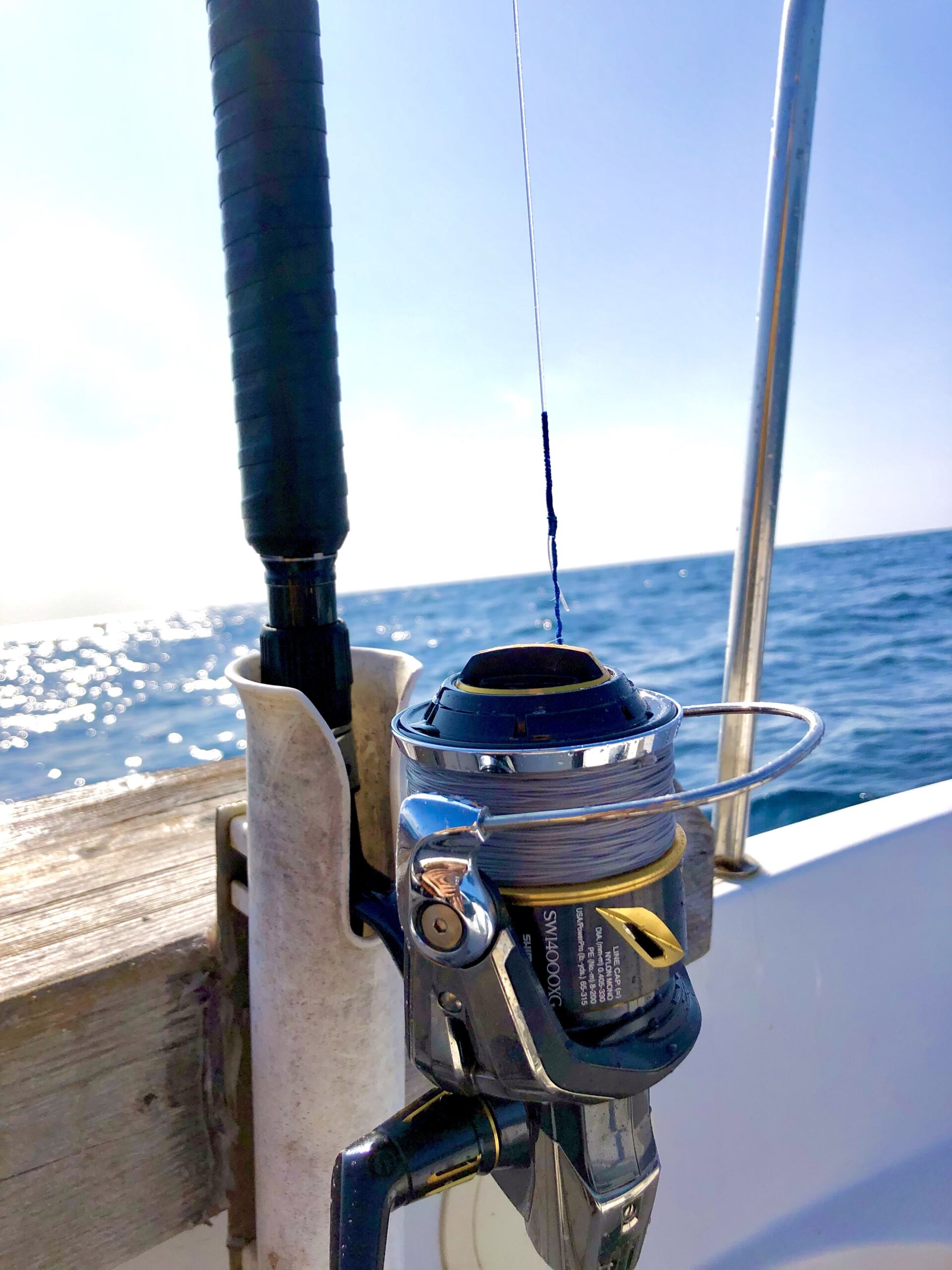
- High-end spinning reel (Shimano Stella SW 14000–20000, Daiwa Saltiga): $900–$1,200
- Purpose-built casting rod (Daiwa Saltiga Dogfight, SOULS Level series): $450–$670
- PE line, leaders, lures, hooks, and consumables: $200–$350
A single complete setup costs $1,550 to $2,220. Experienced anglers typically bring two or three fully rigged outfits to account for line breaks, different lure presentations, and backup needs. The average Japanese tuna angler is carrying $3,000 to $6,000 worth of personal equipment onto an $800 charter boat.
International high-end charters operate on a fundamentally different model. The rate is higher, but it includes everything: premium tackle maintained in perfect condition by the crew, pre-rigged leaders, carefully selected lures, and expert assistance throughout the fight. Guests arrive with nothing but enthusiasm and leave with nothing but memories and photos.
American and European charter operations are not selling access to fishing grounds—they are selling complete service experiences, and their pricing reflects that comprehensive offering.
Two Philosophies: Personal Mastery vs. Curated Experience
This distinction reflects fundamentally different answers to a basic question: what exactly is being purchased?
Japan operates on a personal ownership model. The value lies in selecting your own gear, mastering your own techniques, and taking full responsibility for every aspect of the fishing process. The charter fee covers logistics and access; everything beyond that—the tackle selection, rigging expertise, and fighting technique—is considered the angler’s domain and pride. This creates a culture where investing heavily in personal equipment is not just acceptable but expected.
The Western model operates on a service delivery framework. Clients are purchasing an outcome: the experience of fighting a giant bluefin under professional guidance, with every technical variable managed by experts. The angler’s contribution is physical effort and payment; everything else is handled by the crew. The higher price reflects the genuine cost of delivering that outcome reliably.
Hidden Costs: The Tip Culture Gap and Currency Volatility
Two additional factors complicate international cost comparisons: tipping expectations and exchange rate fluctuations.
In North America, gratuities for charter captains and crew are not optional gestures of satisfaction—they are structural components of compensation. Charter fishing operates within a service economy where base wages are suppressed and tips are expected to bridge the gap. The standard 15-20% on a $1,500 charter adds $225-$300 per trip—equivalent to nearly half the cost of an entire Japanese charter.
Currency movements add another layer of complexity. The sustained weakness of the Japanese yen has made international charters dramatically more expensive for Japanese anglers over the past several years. What was once an “ambitious but achievable” overseas trip has shifted toward “once-in-a-lifetime expedition” territory for many.
The Real Economics: Total Cost Analysis
When all factors are considered—charter fees, tackle costs amortized over time, consumables, and gratuities—the economic picture becomes more nuanced:
| Cost Component | Japan (per day) | USA East Coast (per day) |
|---|---|---|
| Charter (full vessel) | $650–$800 | $1,500–$2,200 |
| Tip / Gratuity | $0 | $225–$440 |
| Tackle (amortized over ~50 trips) | $60–$120 | Included in charter |
| Consumables (line, lures, leaders) | $20–$50 | Included in charter |
| Estimated total per vessel | $730–$970 | $1,725–$2,640 |
Tackle costs amortized assuming 50 fishing days over equipment lifetime. Consumables estimated per trip.
Japan remains significantly more affordable, but the gap is smaller than headline charter rates suggest—and it comes with the requirement that anglers invest substantial time and money in building personal tackle collections before ever stepping aboard.
Cultural Economics: What the Numbers Really Mean
The economic differences between Japanese and international tuna fishing ultimately reflect deeper cultural choices about the nature of angling itself. Japan’s model assumes a long-term relationship between angler, equipment, and local waters. Owning premium tackle, developing personal techniques, and gradually refining one’s approach are integral to the identity of being an angler.
The all-inclusive charter model assumes something different: that many participants are visitors to the fishery—traveling anglers for whom bluefin fishing represents one extraordinary experience among many, not a regular pursuit. The charter operator becomes not just a boat driver but a curator of peak experiences.
Neither system is inherently superior. Each represents an adaptation to local expectations, economic conditions, and fishing cultures. Japan’s lower boat costs and higher tackle investment make sense for dedicated anglers who fish regularly. The expensive, fully-serviced Western model serves those who fish rarely but want guaranteed access to the sport’s highest levels.
What is certain is that Japan’s demanding domestic market—where anglers expect to own and maintain their own premium equipment—created precisely the environment that pushed manufacturers like Shimano and Daiwa to develop reels like the Stella SW and Saltiga to their current world-leading standards.
Chapter 11 will examine how these different fishing cultures express themselves through media and storytelling—the contrast between Japan’s detailed technical documentation and the video-first content that dominates English-language fishing media.
Sources
| Source | Content | URL |
|---|---|---|
| FishingBooker | Global charter rate data (USA, Canada, Australia, South Africa) | fishingbooker.com |
| PEI Bluefin Charters | Canada PEI charter rates and specifications | peibluefintunacharters.com |
| Salty Cape | Cape Cod charter pricing and tipping conventions | saltycape.com |
| The Hull Truth | US forum discussions: charter tipping culture and standards | thehulltruth.com |
| Fisheries Ireland | CHART program charter rates and structure | fisheriesireland.ie |
| Shimano Japan | Stella SW official retail pricing | fish.shimano.com |
| Daiwa Japan | Saltiga official retail pricing | daiwa.com |
| SOULS | Level / ASHURA series rod pricing | souls-web.com |
| VARIVAS | Avani Casting PE line pricing | varivas.co.jp |


コメント