Final Chapter: When Drones Find the Fish and Boats Drive Themselves — What Will Still Be “Fishing”?
If you have read all eleven chapters of this series, you don’t need another summary. You already understand how the Tsugaru Strait’s six-knot currents shaped Japan’s high-drag fighting philosophy, how England’s CHART program created 4,490 first-time bluefin anglers through institutional design, and why a Japanese angler’s social media post reads like a technical resume while a Western angler’s looks like a movie trailer.
The differences are documented. What matters now is the question those differences point toward: What happens next?
Tuna casting stands at a genuine crossroads. Technology that makes finding fish easier, economics that make the sport increasingly exclusive, and regulations that govern what we can do with the fish we catch—all three are accelerating toward decisions that will define what this sport looks like for the next generation.
The 2030 Scenario: When the Boat Does Everything Except Cast
Consider what becomes possible when existing technologies converge.
An autonomous drone lifts silently from the boat’s roof and climbs to altitude. Its AI camera system scans several kilometers of ocean surface in real time, detecting the faint disturbances that indicate feeding activity—the subtle boil, the scattered baitfish, the shadow of a moving school beneath the surface—faster and more reliably than any human eye. The data feeds directly to the vessel’s navigation system, which calculates the school’s speed and heading, identifies the optimal intercept angle that keeps engine noise outside the fish’s detection range, and positions the boat automatically.
The omnidirectional sonar tracks the school’s depth and movement in 360 degrees around the hull. The captain reads the screen and calls the shot: “Ten o’clock, sixty-five meters, running at twenty feet.” The angler picks up the rod and casts where instructed.
This is not science fiction. Drone-based maritime reconnaissance, GPS-stabilized auto-positioning, and omnidirectional sonar tracking all exist on the water right now. The integration of these systems into a unified fishing platform is not a question of whether, but when.
When that convergence arrives, a question that has been building throughout this entire series will demand a direct answer: If the boat finds the fish, positions itself, and tells you exactly where to cast—and all you contribute is the physical act of throwing a lure—is that fishing? And more importantly, is it the fishing you came for?
Three Crossroads the Sport Cannot Avoid
Crossroads One: Technology — Will the Search Itself Survive?
The forward-facing sonar debate consuming American tournament circuits—NPFL’s complete ban from 2025, B.A.S.S.’s staged restrictions—is the opening argument in a much larger conversation. The anxiety driving those regulatory decisions is not really about sonar. It’s about what happens to fishing when the uncertainty is removed.
Reading water, interpreting environmental signals, predicting where fish will be based on accumulated experience—these are the skills that separate an angler from someone who simply holds a rod. When a screen tells you exactly where the fish is and exactly where to cast, those skills become irrelevant. The sport becomes something different. Whether that something different is better or worse depends entirely on what you came for.
Crossroads Two: Access — Who Gets to Participate?
As documented in Chapters 9 and 10, the economics of bluefin tuna fishing are moving in one direction. American East Coast charters already exceed $2,000 per day before tips. Research from North Carolina State University confirms that anglers earning below $150,000 annually have effectively self-selected out of regular bluefin participation.
Japan’s model, where anglers absorb equipment costs personally rather than paying for full-service charters, distributes the financial burden differently but doesn’t eliminate it. A Stella SW and purpose-built casting rod represent a $2,000 investment before the angler ever boards a boat. As those prices continue rising, the pool of people who can participate at the sport’s highest level narrows.
Crossroads Three: Conservation — From “Harvest” to “Participation”
Pacific bluefin tuna stocks are recovering. That recovery is a direct consequence of strict international management measures that have made the Japanese regulatory framework one of the most demanding in recreational fishing worldwide. But the direction of travel is clear: the era of freely retaining large bluefin tuna as a routine outcome of recreational fishing is ending in most parts of the world.
As retention becomes more restricted, the question of what recreational fishing is actually for becomes unavoidable. If you cannot reliably keep the fish, what are you paying for? What are you doing out there?
There is, however, another perspective that deserves attention. Even within Europe, Germany — consistent with its animal protection laws — bans catch-and-release for recreational purposes as a form of animal cruelty. The UK champions “releasing as the right thing to do,” while Germany holds that “releasing is cruel, so you must take the fish home.” This contradiction underscores a crucial point: the ethics of catch-and-release can never be a universal moral absolute.
In an age when we can no longer bring our catch home, what do we find of value out on the sea — and what are we willing to pay for? That philosophy is what is now being called into question.
What Japan’s “Personal Ownership” Culture Means in This Context
Against this backdrop, the Japanese approach to tuna casting takes on a different significance than it might appear to have from the outside.
While the rest of the world moves toward full-service charter experiences where the operator handles everything and the angler simply shows up, Japanese anglers continue to personally own, rig, and maintain their own tackle. They tie their own knots, select their own lures, and take full responsibility for every technical decision from the moment they leave the dock.
In a world where automation is progressively removing human judgment from the fishing process, this insistence on personal ownership and accountability represents something worth examining carefully. The drone will find the fish. The boat will position itself. But the knot you tied at home at midnight, the lure you chose based on three seasons of observation, the drag setting you arrived at through hard experience—those remain yours. No algorithm decided them. No service package included them.
Whether this represents the future of meaningful fishing or simply a cultural preference that will eventually be overtaken by more efficient approaches is a question each angler will answer for themselves. But it’s worth noting that Japan’s demanding domestic market—the market that required Shimano and Daiwa to develop the Stella SW and Saltiga to their current levels—was built by anglers who insisted on owning and understanding their own equipment.
What Will You Do on the Next Tide?
Technology will keep advancing. Regulations will keep tightening. Charter prices will keep rising. The drone scenario is coming, in some form, to a boat near you.
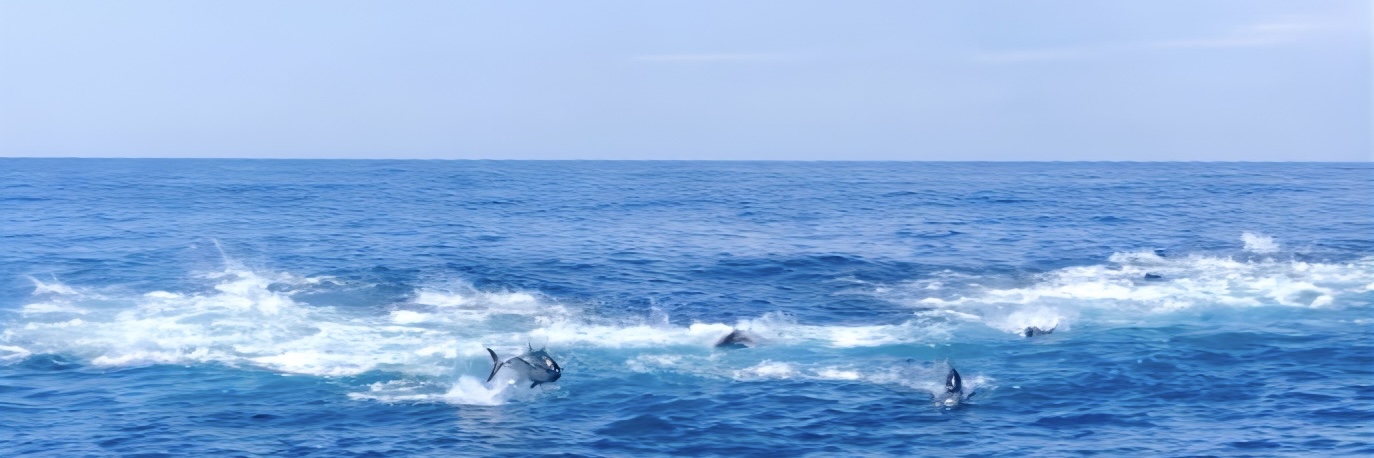
And when it arrives, the water will still explode. The drag will still scream. The rod will still bend to angles that seem impossible. The fish will still be a bluefin tuna, one of the fastest and most powerful animals in the ocean, and it will still fight with everything it has.
The question is what you brought to that moment. How much of the journey to that explosion was yours—your reading of the conditions, your choice of equipment, your decision about where to cast and how to retrieve—and how much was delegated to systems designed to remove uncertainty from the process.
There is no universally correct answer. Using every available technology to maximize the probability of encountering fish is a legitimate choice, and the fight itself remains genuinely demanding regardless of how the fish was located. Choosing to work with less, to preserve the search and the uncertainty as part of the experience, is equally legitimate.
What matters is knowing where you stand and why. Understanding what you are actually enjoying when you are on the water. And recognizing that the choices you make—about technology, about retention, about how you share the experience with others—contribute to the shape of a sport that will outlast any individual angler’s time on the water.
The fish will still be there. The question is what kind of fishing will be waiting alongside them. 【MOMO 2026】
Thank you for reading all twelve chapters.
We will see you on the next tide.
Sources
| Source | Content | URL |
|---|---|---|
| NPFL | 2025 forward-facing sonar ban — official statement | nationalprofessionalfishingleague.com |
| B.A.S.S. | 2025–2026 live sonar restriction rules | bassmaster.com |
| Cefas (UK Gov) | CHART program 3-year results — 4,490 new participants | cefas.co.uk |
| WCPFC | Pacific bluefin tuna stock recovery data | wcpfc.int |
| NC State / Sea Grant | Bluefin tuna angler income demographics research | ncseagrant.ncsu.edu |